

For decades, the fashion industry operated under a strict, top-down hierarchy. Elite designers, legacy magazine editors, and exclusive runway shows dictated what people wore, establishing trends months before garments reached retail stores. Today, that centralized power structure has dissolved.
Social media platforms have decentralized the industry, shifting the control of trends from corporate offices to the consumer. By changing how clothes are designed, marketed, bought, and perceived, digital networks have created a real-time ecosystem that moves at the speed of an algorithm.
The Democratization of the Runway
Before the rise of social media, fashion weeks in Paris, Milan, New York, and London were highly guarded events. Attendance was restricted to retail buyers and fashion journalists. Social media dismantled these barriers by introducing live streaming and instant content sharing.
Now, a teenager in Ohio has the same front-row access to a luxury brand reveal as a seasoned editor sitting in Paris. Platforms like TikTok and Instagram allow brands to broadcast their collections to millions simultaneously. This immediate exposure has changed consumer behavior, creating a demand for instant gratification. The traditional six-month delay between a runway show and retail availability has been challenged by see-now-buy-now models, where consumers can purchase pieces online the moment they appear on screen.
Furthermore, public feedback is immediate. A design can be praised or dismissed by thousands of commenters within minutes of hitting the runway. This instant critique forces brands to remain highly sensitive to public sentiment, shifting fashion from a monologue delivered by designers to a dialogue with the global audience.
The Rise of the Influencer and the Micro-Trend Economy
The traditional celebrity endorsement has evolved into the influencer marketing economy. While movie stars still secure major brand deals, content creators often wield greater power over daily consumer purchasing decisions. Influencers build their platforms on perceived authenticity and direct engagement, making their style recommendations feel like advice from a friend rather than a corporate advertisement.
This shift has created several distinct tiers of creators:
-
Mega-influencers: Accounts with millions of followers that provide massive reach for global brand awareness campaigns.
-
Macro-influencers: Creators with hundreds of thousands of followers who specialize in specific style niches or aesthetics.
-
Micro- and Nano-influencers: Accounts with smaller, highly dedicated followings that boast elevated engagement rates and localized trust.
The hyper-acceleration of content has also birthed the micro-trend. Historically, fashion trends operated on a 20-year cycle, slowly moving through various subcultures before entering the mainstream. Social media has compressed this timeline into weeks or even days. Algorithms identify rising aesthetics, viralize them, and create rapid demand for highly specific styles, such as cottagecore, dark academia, or corporate chic.
Real-Time Production and the Rise of Ultra-Fast Fashion
The demand generated by rapid micro-trends requires a supply chain that can keep pace. Traditional fashion brands plan inventory months in advance, a strategy that cannot accommodate a trend that goes viral on a Tuesday and fades by the following month. This gap has enabled the rise of ultra-fast fashion retailers.
These companies utilize advanced data scrapers and algorithms to monitor social media platforms for rising search terms, hashtags, and viral videos. Once a style begins to trend, internal design teams generate digital patterns, and local manufacturing hubs produce small batches within days. If the item performs well online, production scales up immediately.
While this agile supply chain allows consumers to participate in trends affordably and quickly, it has introduced massive challenges regarding waste and copycat designs. Independent creators frequently report seeing their unique, handcrafted designs replicated by mass-production algorithms within a week of posting their work online.
Social Commerce and Frictionless Shopping
Social media platforms have transitioned from digital lookbooks into fully integrated retail storefronts. The traditional consumer journey required a user to see an item on social media, open a web browser, search for the brand, locate the item, and enter payment details. Every step in this process introduced a point of friction where the consumer might abandon the purchase.
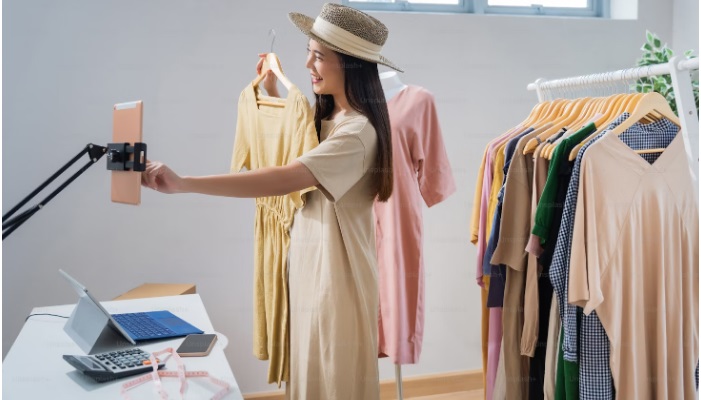
Social commerce eliminates these steps by embedding the checkout process directly into the social application. Features like shoppable tags, in-app checkout, and live-stream shopping allow users to purchase a garment in a few taps without ever leaving their feed. Live shopping events, in particular, combine entertainment with commerce, allowing hosts to try on clothes, answer real-time questions about fit, and offer limited-time discounts to viewers. This environment capitalizes on impulse buying and urgency, fundamentally altering retail conversion rates.
Shaping Identity and Subcultural Communities
Beyond commerce, social media acts as a global archive and community hub for niche style subcultures. Historically, individuals with unconventional styles were isolated by geography. Today, digital spaces allow global communities to form around highly specific aesthetics.
These digital spaces provide a platform for marginalized voices to challenge mainstream beauty and fashion standards. Movements advocating for size inclusivity, gender-neutral fashion, and adaptive clothing for disabled individuals gained momentum through grassroots social media campaigns. Users can demand visibility and accountability directly from brands, transforming fashion into a tool for social commentary and identity expression.
The Sustainability Paradox
The relationship between social media and fashion sustainability is deeply conflicted. On one hand, the platform ecosystem encourages overconsumption. Haul culture, where creators film themselves unboxing hundreds of dollars of cheap clothing, normalizes the idea that garments should only be worn once before being discarded. The constant pressure to present a curated, never-repeating wardrobe online drives excessive purchasing.
On the other hand, social media is the primary vehicle for the sustainable fashion movement. Activists use these platforms to expose unethical manufacturing practices, educate consumers on the environmental impact of synthetic textiles, and promote alternative consumption models. Digital communities have driven the massive resurgence of thrifting, clothing swaps, and DIY upcycling. Consumers regularly use their collective digital voice to pressure major corporations to adopt transparent sourcing, fair labor conditions, and circular production methods.
Frequently Asked Questions
How do algorithms determine which fashion trends become popular?
Algorithms analyze user engagement metrics, including watch time, shares, comments, saves, and search queries. When a specific garment, aesthetic, or hashtag experiences a sudden spike in engagement, the algorithm amplifies that content to a broader audience. This automated loop turns niche styles into viral trends by predicting and shaping what users see next.
What is the difference between fast fashion and ultra-fast fashion?
Traditional fast fashion brands operate on a production cycle of a few weeks, replicating runway trends for retail stores. Ultra-fast fashion companies compress this cycle to a matter of days. They use automated data analysis to track social media activity and produce garments in small initial quantities, adjusting manufacturing instantly based on real-time online sales data.
How has social media changed the role of traditional fashion magazines?
Traditional fashion magazines have lost their position as the primary gatekeepers of style trends. While legacy publications still hold prestige, consumers no longer wait for a monthly print issue to discover new styles. Magazines have had to pivot toward digital storytelling, multimedia content, and cultural analysis to maintain relevance alongside independent content creators.
What is live-stream shopping, and why is it growing?
Live-stream shopping is a digital retail format where a host showcases products via a live video broadcast. Viewers can interact through a live chat, ask questions about sizing, fabric quality, or styling, and purchase the featured items directly through embedded links. It is growing because it combines entertainment with immediate, frictionless buying.
How can independent fashion designers protect their work from being copied online?
Independent designers face significant challenges due to the speed of digital reproduction and gaps in fashion copyright laws, which often protect logos but not utility designs like clothing shapes. Designers protect themselves by documenting their creation process publicly, building a loyal community that flags counterfeits, utilizing digital watermarks, and pursuing legal action for copyright or trademark infringement when applicable.
Does social media influence the physical design of clothing?
Yes, many designers now create clothing specifically tailored for digital visibility. This practice involves selecting vibrant colors, bold patterns, distinctive silhouettes, and reflective textures that translate well on phone screens and photograph cleanly. Pieces are often designed with the camera in mind, ensuring they stand out in a fast-scrolling feed.
How has social media impacted the resale and secondhand fashion market?
Social media has turned secondhand shopping into a mainstream trend by destigmatizing used clothing. Platforms allow peer-to-peer marketplaces to thrive, enabling users to turn thrifting into a business. Creators share vintage styling guides and thrift haul videos, turning circular fashion into a desirable aesthetic centered on individuality and sustainability.


