

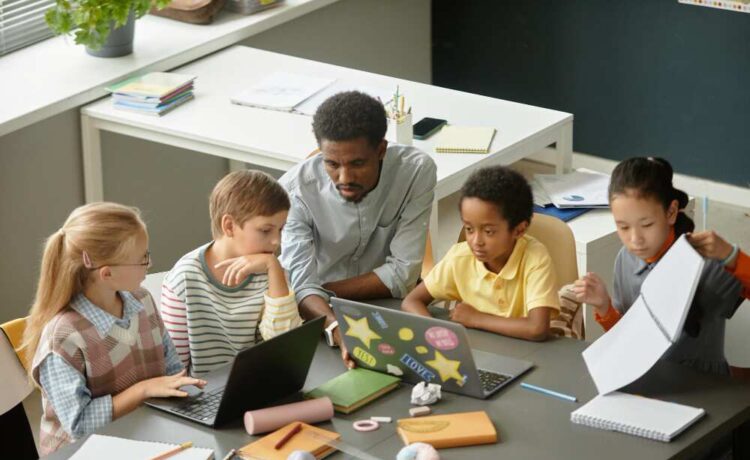
Traditional educational frameworks have historically placed a heavy emphasis on individualized learning and direct lecture delivery. In this classic model, students listen to an instructor, take notes in isolation, and complete assessments to demonstrate personal mastery of a topic. However, modern educational research has shifted significantly toward peer-to-peer interaction, introducing structured collaborative learning models into classrooms worldwide.
Collaborative learning is an educational approach that involves groups of students working together to solve a problem, complete a task, or create a product. Rather than functioning as a passive recipient of information, the student becomes an active participant in the knowledge-construction process. This pedagogical shift fundamentally changes the dynamic of the classroom, fostering deeper cognitive engagement, cultivating vital interpersonal skills, and preparing students for the structural demands of the modern workforce.
Cognitive Development and Deeper Conceptual Understanding
One of the most immediate benefits of collaborative learning is the acceleration of intellectual development. When students discuss academic concepts with peers, they are required to engage in high-level cognitive processing that rarely occurs during solo study sessions.
-
The Power of Peer Explanation: To explain a complex concept to a classmate, a student must organize their thoughts, identify the core principles of the subject matter, and translate that knowledge into accessible language. This process forces the explaining student to confront gaps in their own understanding, strengthening their memory retention and mastery of the material.
-
Exposure to Alternative Perspectives: In an individual learning environment, a student only interacts with their own interpretation of a text or problem. In a group setting, they encounter a diverse array of problem-solving methodologies and interpretations. This exposure challenges implicit biases, broadens intellectual horizons, and teaches students that many complex problems have multiple valid solutions.
-
Stimulation of Critical Thinking: Group work naturally generates healthy intellectual friction. When group members disagree on an answer or approach, they must debate the merits of their respective positions. This requires students to analyze evidence, evaluate claims objectively, and construct logical arguments to defend their viewpoints.
Cultivation of Interpersonal and Emotional Intelligence
Academic success is only one component of a holistic education system. To thrive outside the classroom, students must develop robust social competencies. Collaborative learning serves as a low-stakes laboratory for building emotional intelligence and interpersonal skills.
Development of Active Listening Competencies
True collaboration is impossible without active listening. Students must learn to quiet their own thoughts, give undivided attention to their peers, and process ideas that may differ significantly from their own. Over time, this teaches individuals to listen to understand rather than simply listening to respond, a skill that is vital for conflict resolution in all areas of life.
Growth in Empathy and Cultural Awareness
Modern classrooms are highly diverse, bringing together individuals from various socioeconomic, cultural, and academic backgrounds. Group projects force students to interact closely with peers they might not otherwise choose to socialize with. Working toward a shared objective helps break down social cliques, reduces stereotypes, and nurtures deep empathy as students learn to appreciate the unique strengths and challenges of their classmates.
Shared Responsibility and Accountability
In a collaborative framework, the success of the group depends on the contribution of every member. This dynamic instills a sense of collective accountability. Students learn that their work ethic, punctuality, and reliability directly impact the well-being of others, fostering personal maturity and a sophisticated understanding of societal interdependence.
Preparation for the Dynamic Global Workforce
The global economy has shifted away from isolated, routine labor toward knowledge-based, cross-functional teamwork. Major employers consistently report that technical knowledge is insufficient if an employee cannot collaborate effectively within a team structure. Education systems that rely solely on individualized testing fail to prepare students for this reality.
By embedding collaborative structures into the curriculum, schools replicate the operational mechanics of professional environments. Students learn how to navigate group dynamics, manage differing work ethics, delegate tasks based on individual strengths, and manage complex projects with moving parts. They graduate not just with content knowledge, but with a highly marketable suite of collaborative competencies.
Strengthening Communication Skills and Psychological Safety
Effective communication is a skill that must be practiced repeatedly to be mastered. Collaborative learning drastically increases the volume of verbal communication that takes place in a standard classroom compared to teacher-centric instruction.
In a traditional lecture setting, only a few extroverted students tend to speak or ask questions. In contrast, small-group settings provide a safer, less intimidating psychological environment. Shyer or less confident students are far more comfortable sharing their insights, asking for clarification, and testing out unrefined ideas within a group of three or four peers than they are in front of an entire lecture hall. This regular practice builds oral communication confidence and helps all students discover their unique academic voice.
Frequently Asked Questions
How can teachers prevent a single student from doing all the work in a group project?
To prevent the common problem of one student carrying the entire academic workload, educators must design projects that feature both collective goals and individual accountability metrics. This can be achieved by assigning specific, documented roles to each group member, requiring individual progress journals, or grading separate components of the project independently. When each student knows their specific contribution is visible and graded, the likelihood of social loafing drops significantly.
Does collaborative learning hold back high-achieving students?
Academic research indicates that high-achieving students benefit immensely from collaborative environments. While they may not be learning new basic facts from their peers, the act of teaching, clarifying, and defending advanced concepts to classmates deepens their own cognitive mastery and builds invaluable leadership abilities. Furthermore, well-designed group tasks are complex enough to stretch the abilities of all students, offering multiple layers of analytical depth.
How does collaborative learning affect students with learning disabilities or social anxiety?
When implemented with care, collaborative learning creates an inclusive environment that supports neurodivergent students and those with social anxiety. Small groups reduce the overwhelming nature of whole-class interactions and allow students to contribute using their specific strengths, such as research, writing, design, or organization. Teachers can facilitate this by establishing clear ground rules for respectful communication and monitoring group dynamics closely to ensure psychological safety.
Can collaborative learning models be implemented effectively in online or remote education?
Yes, modern digital learning platforms offer robust tools that make remote collaboration highly effective. Digital breakout rooms, shared cloud workspaces, collaborative whiteboards, and asynchronous communication threads allow students to collaborate across geographical distances. In many cases, these virtual group projects mirror the exact remote-work environments that students will encounter in their professional careers.
What is the ideal group size for a collaborative learning activity?
Educational research suggests that the ideal size for a collaborative learning group is between three and five students. Groups smaller than three often lack a sufficient diversity of perspectives and can struggle if one member is absent. Groups larger than five make it too easy for quiet students to withdraw from the conversation and drastically increase the organizational friction required to keep everyone engaged and on task.
How should educators assess collaborative work fairly?
Fair assessment in collaborative learning requires a hybrid grading rubric that evaluates both the final product and the collaborative process itself. Teachers can combine a shared group grade for the final deliverable with individual grades derived from peer evaluations, self-assessments, and teacher observation of individual performance. This approach ensures that a student’s final grade reflects both their teamwork capability and their personal academic mastery.


